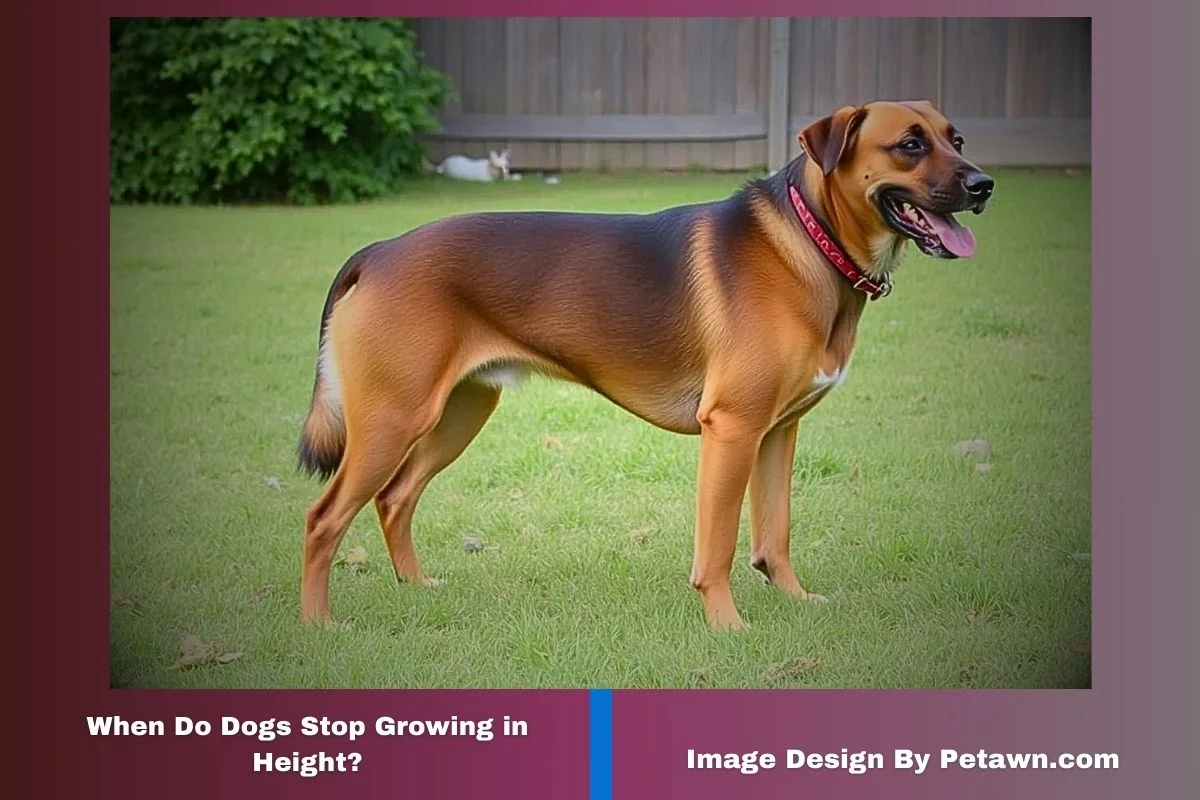
Your At-a-Glance Puppy Development Timeline
As a veterinarian, I always tell new pet parents that understanding these early stages is the first step to giving your puppy the best start. It is not just about how big they will get; it is about how they develop into a healthy, happy adult dog. This timeline will show you what to expect.
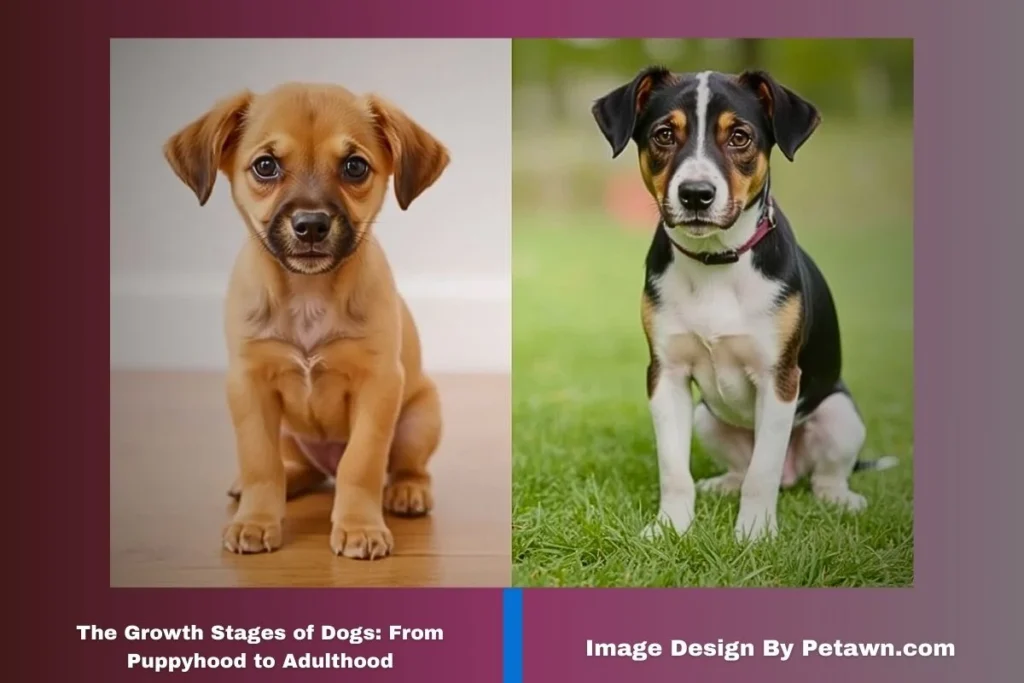
Newborn (0-2 Weeks): The Helpless Phase
In this first month, your puppy is completely dependent on its mother. They cannot see or hear yet and spend most of their time sleeping and nursing. Their primary growth focus is on gaining weight and developing their internal systems. For any dog, this is a critical period where proper nutrition from the mother is everything.
Transitional (2-4 Weeks): Wobbly Explorer
This is when the magic starts. Their eyes and ears open, and they begin to experience the world. You will see them take their first wobbly steps and start to interact with their littermates. This is a short but vital stage where they begin the quick transition from helpless newborn to a curious little animal.
Socialization (4-12 Weeks): Fear & Fun
This is, without a doubt, the most important stage for shaping your puppy’s future temperament. They are like little sponges, ready to learn about people, other dogs, and new environments. Positive experiences during this time are crucial. This is also when they are weaned onto solid food and get their first set of teeth. How fast they learn and grow now sets the tone for their entire life.
Teething (3-6 Months): Landshark Mode
Get your chew toys ready! Your puppy will start to lose its baby teeth, and the adult teeth will begin to come in. This process is uncomfortable, which is why they want to chew on everything—including your hands and furniture. This is also a massive growth spurt period, especially for larger breed dogs. You will likely notice they seem to get bigger overnight.
Adolescence (6-18 Months): Testing Boundaries
Think of this as the teenage years. Your dog may start to test limits, forget training they once knew, and exhibit some goofy, unpredictable behaviors. Physically, they are reaching their full height, but they are not done growing. They will begin to “fill out,” developing the muscle and chest width of an adult. For many dogs, especially large breeds, growth plates are still open, so proper diet and exercise remain critical.
Adulthood (1-3 Years): All Grown Up
So, when is a dog fully grown? Most are considered adult dogs at around 1 year old, but this is just the age at which they are socially and sexually mature. Their skeletal growth is done, and their growth plates have closed. However, giant breed dogs like Mastiffs may continue to add muscle and mass until they are 2 or even 3 years old. They are now at their full size and weight, ready for a long, healthy life as your best friend.
The Factor #1: Your Puppy’s Breed Size (With Examples)
As a veterinarian, the most common question I get is, “How big will my puppy get?” While mixed breeds can be a surprise, the best predictor for any dog is its breed size. Why is this so important? Because larger dogs have more growth to do, and their growth plates take much longer to close. This timeline isn’t just about height; it’s about when their skeleton is fully mature and done developing.

Let’s break down what this means for your puppy.
Small Breed Puppies (e.g., Chihuahua, Pomeranian): 6-12 Months
These little ones grow incredibly fast. You’ll see them hit their adult size very quickly, often by 9 months of age. A Chihuahua might be considered fully grown by 6 months, while a slightly larger Pomeranian may continue to fill out until they are a year old. They are done getting taller but will gain muscle. This quick maturity means you need to slow down their calorie intake sooner to prevent weight gain.
Medium Breed Puppies (e.g., Corgi, Border Collie): 9-12 Months
Medium sized dogs like the Corgi or Border Collie have a growth rate that is still quite rapid. They will usually reach their full height and size around 12 months of age. You might notice they look a bit lanky around 9 months but will continue to develop their adult body until their first birthday. Their growth plates close before their larger cousins.
Large Breed Puppies (e.g., Labrador, German Shepherd): 12-18 Months
Large breed dogs like Labradors and German Shepherds take more time. They are not fully grown at 1 year. They will stop getting taller around 12 to 18 months, but their growth isn’t done. They will continue to gain significant muscle mass and “fill out” their frame until they are about 2 years old. This extended growth timeline is why proper nutrition is so critical to prevent joint issues.
Giant Breed Puppies (e.g., Great Dane, Mastiff): 18-24+ Months
For giant breeds like the Great Dane, the growth period is long. They are not done growing at 18 months. It can take until 24 months or even longer for their growth plates to fully close and their skeleton to reach maturity. You will see a massive spurt in their first year, but they continue to develop size and weight slowly over the second year. How long it takes for a dog to be fully grown is a question of patience with these gentle animals.
How Growth Really Works: It’s All About the “Growth Plates”
In my practice, I find that understanding the “how” behind puppy growth makes the “when” much clearer for pet parents. The entire process hinges on a fascinating piece of canine anatomy: the growth plates. These are the true engines of your puppy’s development, and knowing how they work is the key to ensuring your dog grows up healthy and strong.
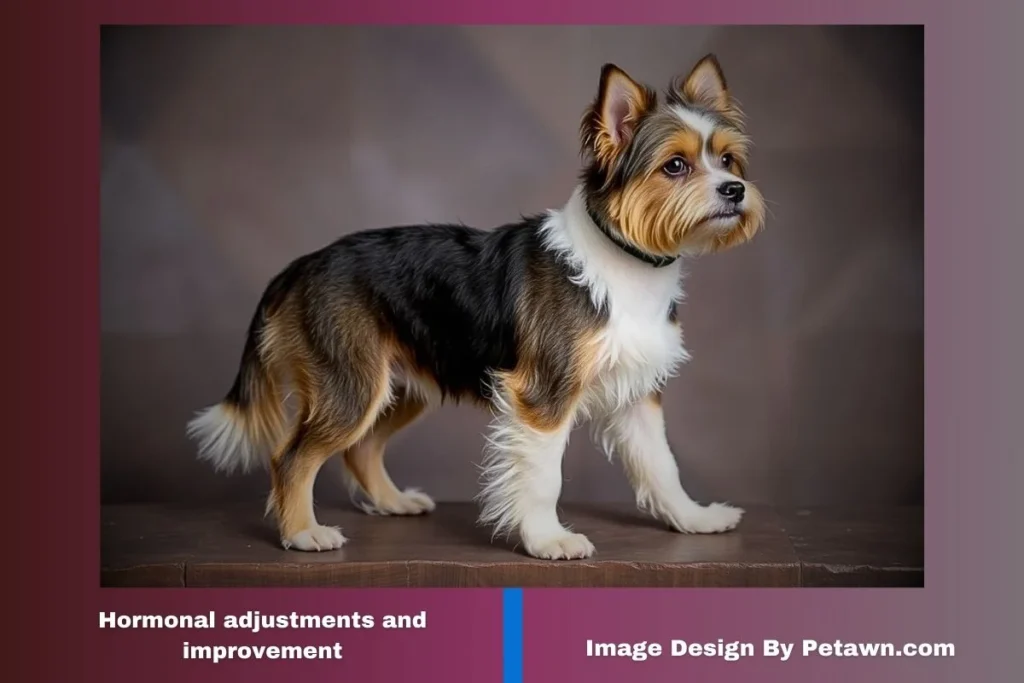
What Are Growth Plates? (The Science, Simplified)
Think of a growth plate as a soft, active area of cartilage found at both ends of your puppy’s long bones. This tissue is not yet solid bone; it’s a construction zone. Here, new cells are constantly being produced. These cells then calcify—meaning they harden—and become part of the solid bone shaft, making the entire bone longer. This is literally how your puppy gets taller.
A puppy is considered fully grown in height only when these growth plates receive a hormonal signal to stop producing new cells and close, becoming completely solid bone. The age at which this closure happens is primarily what determines how long the growth period is for a small, medium, large, or giant breed dog.
Why Your Puppy’s Exercise Needs to Be Gentle
Because these growth plates are soft and vulnerable, they are the weakest part of your puppy’s skeleton. This is why the type of exercise your puppy gets is so critical. High-impact activities like jumping off furniture, running on hard surfaces, or forced jogging can hit these delicate areas with too much force.
This can lead to injuries that mean the plate closes prematurely or unevenly. In a worst-case scenario, this can result in a leg that stops growing correctly, leaving it shorter or crooked compared to the others. For this reason, gentle play on grass, short walks, and avoiding repetitive, jarring motions are essential until your vet confirms those growth plates are closed and your dog is fully grown.
Is My Puppy Growing Normally? 5 Signs of Healthy Development
This is one of the most common worries I hear from new pet parents in my clinic. You look at your puppy every day, and it’s hard to know if they’re on the right track. While every dog is unique, there are clear, reassuring signs that indicate healthy growth. If your puppy is hitting these milestones, you can breathe a little easier.
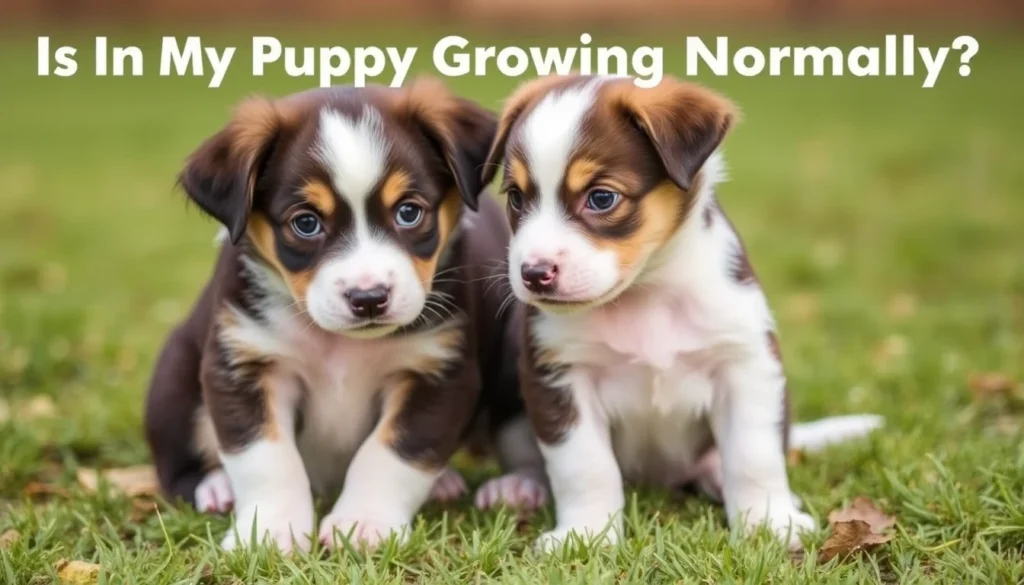
Sign 1: Steady Weight Gain (Without Getting Chubby)
A healthy puppy should gain weight consistently, especially in those first few months. You should see a steady increase week to week. However, this doesn’t mean they should be round or chubby. You should still be able to feel their ribs easily under a thin layer of fat. If your puppy’s weight plateaus for more than two weeks, it’s a good idea to check with your vet.
Sign 2: Proportional Appearance (Paws aren’t too clownish)
It’s true that many puppies have paws that seem too big for their body—this is normal and means they have more growing to do! But overall, their body should still look somewhat proportional, not extremely skinny or pot-bellied. If their abdomen appears swollen, it could mean something else is going on, like worms.
Sign 3: High Energy (Followed by Solid Naps)
A growing puppy is a bundle of energy… in short bursts. You should see them have periods of lively play, exploration, and zoomies, followed by long, deep naps. This cycle of high energy and solid rest is a perfect sign of a healthy, developing body and mind. A puppy that is consistently lethargic or uninterested in play needs to be seen by a vet.
Sign 4: A Shiny Coat and Clear Eyes
Good health shows on the outside. A puppy with a healthy growth rate will have a soft, shiny coat and bright, clear eyes without any discharge. A dull, dry coat or crusty eyes can sometimes indicate nutritional deficiencies or underlying health issues that could affect their development.
Sign 5: Reaching Breed-Specific Milestones
This is a big one. While a Corgi will reach its full size much faster than a Golden Retriever, both should be hitting general developmental milestones around the same age. This includes things like walking properly, playing, learning to socialize, and losing puppy teeth. If your puppy seems significantly behind others of the same breed and age, it’s worth a conversation with your veterinarian.
Red Flags: When to Call Your Vet Immediately
In my years as a veterinarian, I’ve learned that early intervention is the key to preventing small issues from becoming big problems. While most puppies grow without a hitch, some signs demand immediate attention. If you notice any of the following, please stop reading and call your vet right away. Trust your instincts—you know your dog best.
| Symptom | What It Might Mean | Action |
| No weight gain for 2+ weeks | Parasites, malnutrition, or a chronic illness could be stealing essential nutrients, stunting their growth. | Schedule a Vet Visit |
| Severe limping or refusing to put weight on a leg | This could indicate a painful injury to the growth plates, a fracture, or a condition like panosteitis (inflammation in the long bones). | Call Vet Immediately |
| A leg that looks crooked or deformed | An injury may have caused a growth plate to close prematurely or unevenly, leading to an angular limb deformity. | Emergency Visit |
| Obvious pain when touched or moving | Your puppy could be experiencing significant joint or bone pain that needs diagnosis and treatment. | Schedule a Vet Visit |
| A swollen, warm area on a leg or joint | This could signal an infection, a fracture, or in rare cases, a more serious condition. | Emergency Visit |
Remember: It is always better to be safe and get a professional opinion. Your veterinarian can perform an X-ray to check the growth plates and determine the exact cause of the problem. How long you wait can mean the difference between a simple fix and a lifelong issue.
Supporting Your Puppy’s Growth: Nutrition & Exercise
As a veterinarian, I always tell pet parents that their two most powerful tools for ensuring healthy development are in their hands: proper nutrition and appropriate exercise. Getting these right supports steady bone growth, strong muscles, and a robust immune system, setting your puppy up for a long, healthy life.

The Best Food for a Growing Puppy (And What to Look For on the Bag)
Choosing the right food is one of the most important decisions you’ll make. A puppy has very different nutritional needs than an adult dog. Their food must be rich in high-quality protein for muscle development and have the correct balance of calcium and phosphorus for strong bones.
What to look for on the bag:
- Life Stage Statement: The label should explicitly state it is formulated for “growth” or “for all life stages including the growth of large-size dogs” (if you have a large breed). This means it meets the stringent nutritional profiles set by the Association of American Feed Control Officials (AAFCO).
- Breed Size Specification: For large and giant breeds, look for food specifically labeled “large breed puppy.” This food is designed to promote a slower, more controlled growth rate, which is critical for preventing joint disorders in bigger dogs.
- Ingredient Quality: The first few ingredients should be named animal proteins (e.g., chicken, salmon, lamb) rather than vague terms like “meat by-products.”
How much to feed is just as crucial as what you feed. Follow the guidelines on the bag based on your puppy’s expected adult weight, and be prepared to adjust based on their body condition. A pudgy puppy is not a healthy puppy; excess weight puts immense strain on developing joints.
Exercise Rules: How Much is Too Much?
Puppies are energetic, but their bodies are still under construction. The growth plates in their bones are soft and vulnerable to damage from overexertion. The goal is to tire them out mentally and physically without causing stress to their skeleton.
A good rule of thumb: Limit structured exercise like walks to about 5 minutes for every month of age, twice a day. So, a 4-month-old puppy can handle a 20-minute walk, twice daily.
Focus on the right kind of exercise:
- Good: Play sessions on soft grass, short walks, gentle fetch, and indoor exploration.
- Too Much: Long-distance running, jogging with you, jumping off furniture, and walking on hard surfaces like concrete for extended periods. Avoid this until your vet confirms their growth plates are closed, which can be 18 months or older for large breeds.
Remember: Mental stimulation through training and puzzle toys is just as tiring as a long run and is perfectly safe for their developing bodies.
Your Puppy’s Growth: Frequently Asked Questions (FAQs)
As a veterinarian, I answer these questions every single day in my clinic. New puppy owners are wonderfully curious, and getting clear answers is the first step to feeling confident. Here are the most common things pet parents want to know.
When do puppies open their eyes?
This is one of the first magical milestones. Puppies are born with their eyelids completely sealed shut. This protects their underdeveloped eyes from light and debris. You can expect those little eyes to start opening when they are between 10 and 14 days old. Don’t be alarmed if they only open one at a time or seem a bit cloudy at first; their vision will continue to develop and become clearer over the next several weeks.
When do puppies lose their teeth?
Just like human children, puppies go through a teething phase. They are born without teeth, then get a set of 28 sharp baby teeth (deciduous teeth). These begin to fall out when your puppy is around 3 to 4 months of age, making room for their 42 permanent adult teeth. This process can take a few months, so don’t be surprised to find tiny teeth around your house or see a little blood on their toys. Providing safe chew toys is essential during this time to soothe their sore gums.
My puppy’s paws are huge! Does this mean he’ll be big?
You’ve noticed one of the classic signs! Those oversized, clumsy paws are often a good indicator that your puppy has more growing to do. Puppies often grow into their paws, meaning that if they look disproportionately large compared to their legs and body, it’s a sign they haven’t reached their full size yet. It’s not an exact calculator, but it’s a fun clue that you likely have a bigger dog on your hands.
When will my puppy calm down?
Ah, the million-dollar question for every tired pet parent! That boundless “puppy energy” is completely normal. Most puppies will start to show signs of calming down and having better impulse control after they reach social maturity, between 12 and 18 months of age. However, breed plays a huge role. High-energy breeds like Border Collies or Labrador Retrievers may act like playful puppies for several years. The key is consistent training and providing plenty of appropriate exercise and mental stimulation to help them learn to settle.



Leave a Reply to Can Cats Get Parvo? The Ultimate Guide to Protecting… Cancel reply