
1. Why Chicken & Rice Works (and When It Doesn’t)
Digestible Protein + Gentle Carbs
When you boil chicken breast, it yields lean, fat-free protein that’s easy on a sensitive gut. Paired with mild white rice, it forms a gentle carbohydrate base that supplies energy without overloading the digestive system.
- Chicken’s amino acids help repair and heal the gut lining
- White rice vs. brown rice—white cooks faster and is lower in fiber; brown offers more bran but can be rough on an inflamed stomach
Ideal Uses
This vet-approved recipe shines in these scenarios:
- Upset stomach after dietary indiscretion or mild GI upset
- Post-surgery appetite restoration
- Temporary appetite loss in sick or recovering dogs
Limitations
While effective short-term, this meal has clear limits:
- Not a balanced diet beyond 2–3 days
- Nutrient gaps in key vitamins, minerals, and fiber
Declaration: This content is for educational purposes only and does not replace professional veterinary advice. Always partner with your vet to tailor any homemade diet to your dog’s unique health needs.
2. Ratio Confusion

Many online sources instruct pet parents to feed their pup according to weight measures—grams, ounces, or pounds—rather than straightforward cup volumes. This makes portion control less easy to replicate day after day. Standardizing on cups ensures every serving delivers the precise gut-soothing ratio your dog needs.
Rice Variety Overlooked
Several blogs praise whole-grain brown rice without warning that its higher fiber can irritate an inflamed gut. Brown rice takes longer to digest and may worsen loose stool. In contrast, white rice remains the bland, low-fiber staple we recommend for sensitive stomachs.
Missing Hydration & Electrolytes
Most recipes focus solely on solids and skip a hydrating addition like simple bone broth. A homemade broth delivers critical electrolytes and soothes the digestive system. Without this liquid supplement, dogs can struggle to replace fluids lost during diarrhea or vomiting.
Ignored Food Safety Steps
Many guides omit crucial food safety measures. A proper prep routine includes cooling the meal in a crater, refrigerating within one hour, and reheating at a safe temperature. Skipping these steps risks bacterial growth, which can aggravate gastrointestinal issues.
4. Vet-Approved Feeding Plan
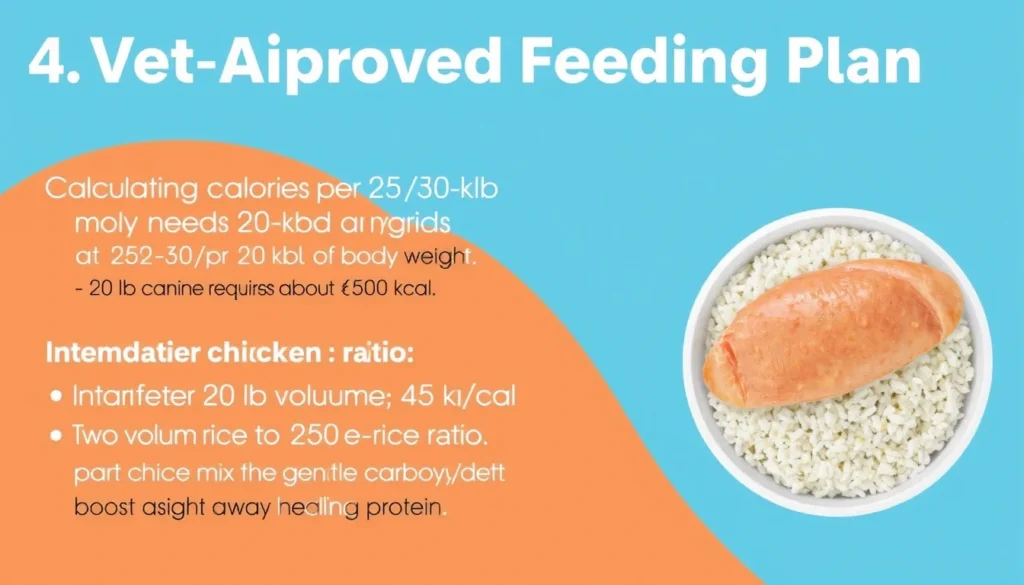
Calculating Calories per Pound of Body Weight
Determine your dog’s daily energy needs at 25–30 kcal per lb of body weight. For instance, a 20 lb canine requires about 500 kcal when you target 25 kcal/lb.
Standard Chicken-to-Rice Ratio
Combine ingredients using a 2:1 volume ratio—two parts rice to one part chicken. This mix delivers a gentle carbohydrate boost alongside healing protein.
Sample Feeding Table
| Dog Weight | Total Daily Volume (cups) | Chicken Volume | Rice Volume |
| 10 lb | 0.75 | 0.25 | 0.50 |
| 20 lb | 1.50 | 0.50 | 1.00 |
| 40 lb | 3.00 | 1.00 | 2.00 |
| 70 lb | 5.25 | 1.75 | 3.50 |
5. Step-by-Step Recipe & Variations
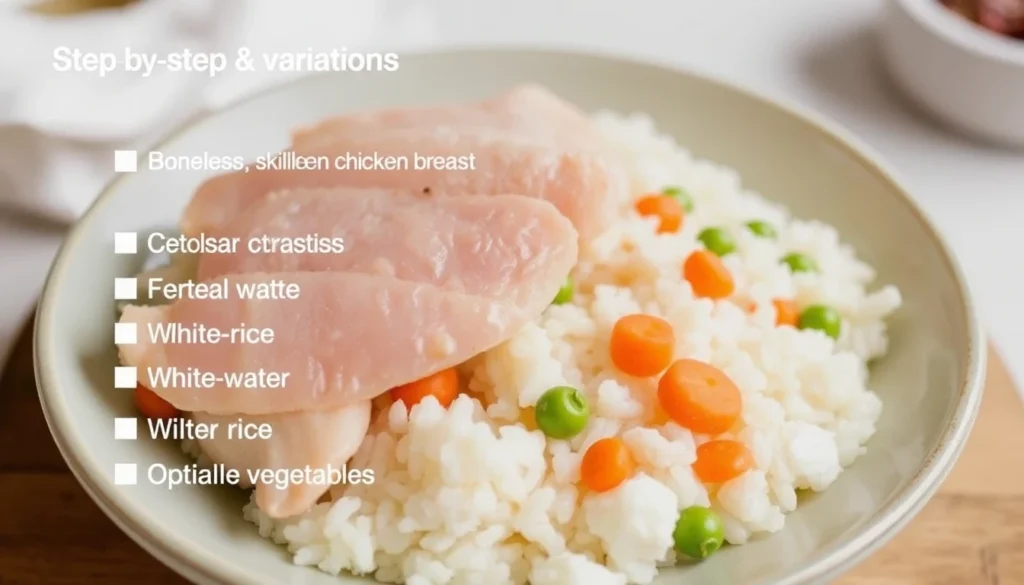
Ingredients Checklist
- Boneless, skinless chicken breast
- White rice
- Filtered water
- Optional dog-safe vegetables (e.g., diced carrots or peas)
This simple recipe delivers lean protein and easy-to-digest carbs. Gather all items before you begin to ensure a smooth prep experience.
Cooking Methods
Choose between two vet-recommended techniques:
- One-pot simmer
- Combine chicken, rice, and water in a single saucepan.
- Bring to a gentle boil, then reduce to low.
- Cover and simmer until rice absorbs liquid—about 16–20 minutes for white rice.
- Separate boiling
- Boil chicken until fully cooked, then remove and shred.
- In the reserved broth, cook rice until tender (40–50 minutes for genuine brown rice).
- Stir shredded meat back into the pot.
Both approaches lock in flavor and minimize cleanup. Always let the meal cool to lukewarm before serving.
DIY Variations
- Pumpkin puree boost Stir in a spoonful of plain pumpkin puree to add soothing fiber and potassium.
- Oat swap for extra soothing fiber Replace half the rice volume with cooked oats for a gentler carbohydrate source.
- Dehydrated carrot flakes Sprinkle in carrot flakes for vitamins and a hint of texture.
These vet-approved tweaks help address nutrient gaps and keep meals interesting for your pup.
6. Portion Scheduling & Transitioning
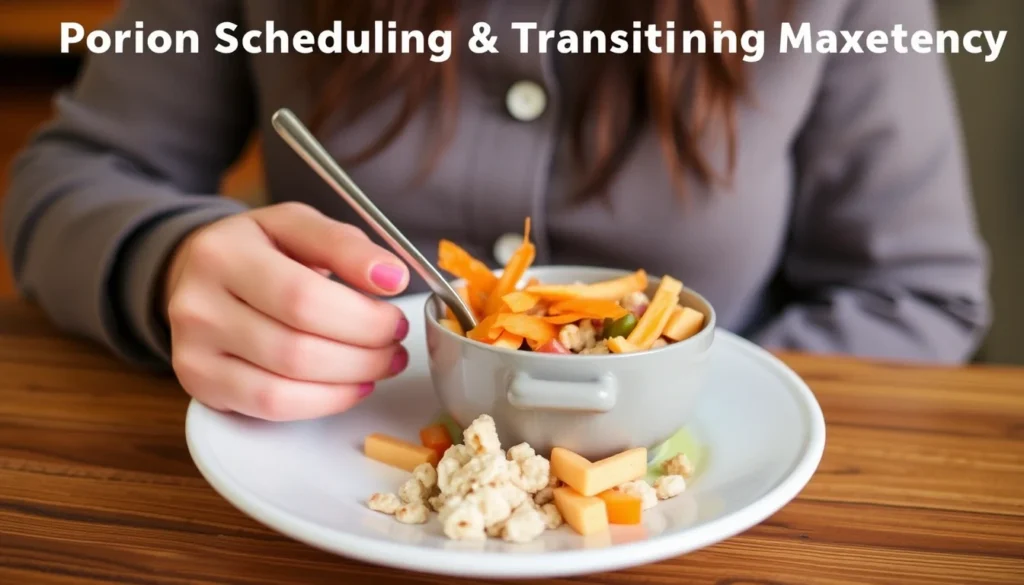
Meal Frequency
When severe diarrhea strikes, a controlled fasting protocol at home lets the digestive tract rest. Withhold food for 12–24 hours, ensuring fresh water and electrolyte support remain available. After fasting, introduce a small meal every few hours—aim for 3–4 feedings per day. This steady schedule helps stabilize gut motility and prevents overloading a weakened stomach.
Gradual Return to Regular Food
Smoothly transition back to your dog’s usual kibble over four days:
- Day 1: 75% chicken & rice, 25% kibble
- Day 2: 50% chicken & rice, 50% kibble
- Day 3: 25% chicken & rice, 75% kibble
- Day 4+: 100% regular diet
Adjust each portion by dog size and activity level to meet nutritional needs without triggering another flare-up.
7. Storage, Safety & Food Handling
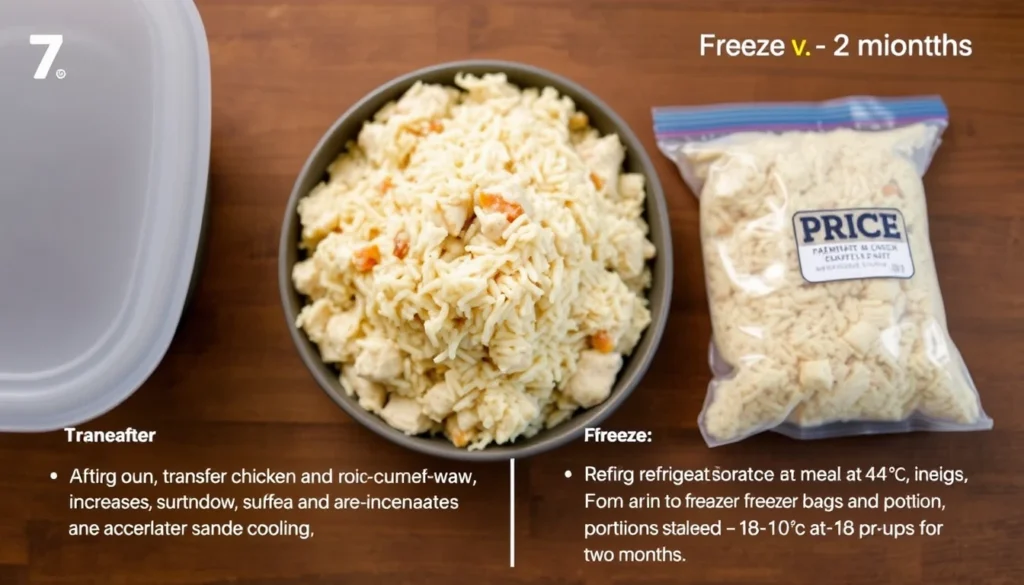
Cooling & Crater Method
After cooking, transfer the chicken-and-rice mixture into a shallow container. Press a small crater in the center—this increases surface area and accelerates cooling. Let it sit uncovered until it drops to lukewarm temperature (below 25 °C), then cover and refrigerate.
Refrigerate (≤ 72 hours) vs. Freeze (≤ 2 months)
- Refrigerator storage at 4 °C or below keeps the meal safe for up to 72 hours.
- For longer storage, portion into sealed freezer bags and freeze at –18 °C for up to two months.
Reheating Safely
Warm each portion gently: use a low-power microwave or a simmering water bath on the stovetop. Stir thoroughly and check with a clean thermometer—serve only when the center reaches at least 74 °C to prevent bacterial growth.
Avoiding Contamination
- Clean prep surfaces and utensils before and after handling pet meals.
- Wash hands with soap and hot water for at least 20 seconds.
- Use separate cutting boards for raw meat and cooked food to block pathogen transfer.
Prepare this routine every time to protect your dog’s digestive system and overall health.
8. Quick-Use Tools & Calculators
Portion Calculator Widget
Enter your dog’s weight in pounds and watch the tool instantly convert that into daily cups of chicken-and-rice mix. It factors in energy needs, ensuring each meal aligns with your pup’s caloric requirements without guesswork.
Printable Feeding Chart PDF
Download a one-page chart listing common weight categories alongside exact chicken and rice volumes per meal. Laminate it for easy reference in your kitchen or tuck it into your vet folder for on-the-go feeding guidance.
9. Myth-Busting & FAQs
Myths
- “Chicken bones are OK” → DANGER: Cooked bones can splinter in the gastrointestinal tract, risking perforations or obstructions that require emergency care.
- “Rice = high fiber” → Only about 1 g of fiber per cup. White rice remains the low-residue staple for inflamed digestive systems.


Leave a Reply